


Lessons from Chang Gung Memorial Hospital
Hepatocellular carcinoma (HCC) remains one of the most challenging cancers to detect early, particularly in regions where chronic liver disease and viral hepatitis are prevalent. In Taiwan, where hepatitis B and C continue to shape population health, early and effective surveillance is not just a clinical priority, it is a public health imperative.
At the centre of Taiwan’s healthcare system is Chang Gung Memorial Hospital (CGMH), the country’s largest hospital network, with ten branches and more than 11,000 beds. As the flagship institution, CGMH plays a critical role in advancing liver disease management through clinical excellence, laboratory innovation, and the adoption of emerging diagnostic approaches.
For patients with chronic liver disease, surveillance is routine. Individuals with hepatitis are typically monitored every six months, while those with cirrhosis are seen more frequently. Ultrasound imaging combined with serum alpha-fetoprotein (AFP) testing has long formed the backbone of HCC surveillance. Yet, despite structured follow-up, early-stage liver cancer continues to be missed.
One of the key challenges lies in the inherent limitations of existing tools. Ultrasound detection is influenced by tumour size, fatty liver, and the extent of fibrosis, while AFP — the most widely used serum marker — is elevated in fewer than half of early-stage HCC cases. AFP levels can also rise during hepatitis flares, leading to false positives. The consequence is a critical diagnostic gap: patients with early, potentially curable disease may not be identified in time.
To address this gap, clinicians in Taiwan have increasingly turned to additional biomarkers, including PIVKA-II (also known as des-γ-carboxy prothrombin). Under Taiwan’s National Health Insurance system, patients with cirrhosis or HCC are entitled to PIVKA-II testing twice a year, alongside ultrasound and AFP.
Clinical experience has shown that PIVKA-II and AFP play complementary roles. In practice, PIVKA-II has helped identify liver cancer cases where AFP levels remain normal and ultrasound findings are equivocal. These additional signals can prompt further investigation using CT or MRI, enabling earlier diagnosis and more timely treatment. For clinicians, this layered approach provides greater confidence in decision-making, particularly for patients at high risk.
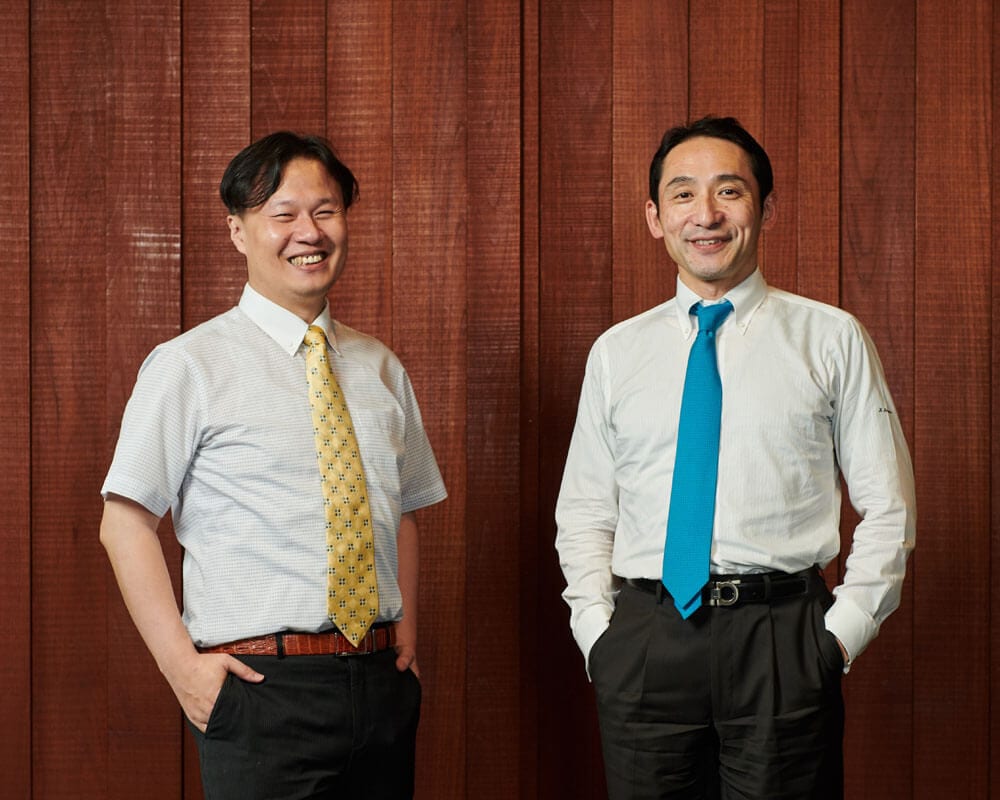
“With Taiwan’s comprehensive health insurance system driving very high testing volumes, laboratories are under constant pressure to do more with the same resources,” said Dr. Chung-Guei Huang, Director of the Department of Medical Laboratory at Lin-Kou Chang Gung Memorial Hospital, in an interview with Roche. “At Chang Gung Memorial Hospital alone, we report more than one million test results every month. Over the past decade, digital transformation — including artificial intelligence, business intelligence and closed-loop hospital systems — has been critical in optimising workflows and releasing additional testing capacity. Even as laboratories evolve, the fundamentals remain unchanged: new tumour markers must be rigorously validated and meet international regulatory standards, such as CE or FDA approval, to ensure consistent, high-quality patient care.”
Watch the full conversation between Dr. Ming-Ling Chang and Dr. Chung-Guei Huang to learn more about how Chang Gung Memorial Hospital is advancing liver cancer detection and care.
As liver disease management becomes more data-driven, attention is shifting towards digital algorithms that integrate multiple risk factors. One such approach under evaluation at CGMH is the GAAD score, which combines gender, age, AFP, and PIVKA-II to stratify HCC risk.
Risk scores are already familiar to clinicians. Tools such as FIB-4 and Child-Pugh are routinely used to assess fibrosis and liver function. GAAD builds on this foundation by focusing specifically on cancer risk, with the ambition of improving early detection and guiding surveillance intensity. While clinical evidence is still being accumulated, there is cautious optimism that such algorithms could eventually be applied to broader high-risk populations.
For laboratories, this represents a new frontier. Beyond handling specimens and instruments, labs are increasingly responsible for implementing and managing digital algorithms — raising new requirements around data governance, cybersecurity, and digital expertise.
Improving HCC outcomes requires collaboration across the healthcare ecosystem, from raising public awareness and encouraging regular surveillance among high-risk groups to strengthening the tools available to clinicians. A key part of this effort is the close partnership between laboratories and clinicians, which ensures diagnostic data is translated into meaningful clinical action. This approach is reflected at Chang Gung Memorial Hospital, where efforts focus on improving quality of life and survival for patients with liver disease and HCC through effective screening, accurate diagnosis and timely treatment, supported by advances in diagnostic science and digital innovation that enable earlier detection of liver cancer.
The views and opinions expressed by Dr. Ming-Ling Chang and Dr. Chung-Guei Huang are their own views and opinions. Roche disclaims all liability in relation to these views and opinions.
Link copied