



Lifestyle changes may slow progression of cognitive impairment — but early diagnosis is vital
In the Asia-Pacific region, a neurology crisis is unfolding. At least 23 million people are living with Alzheimer’s disease; by 2030, that number is expected to rise to 39 million. By 2050 — when a quarter of the population will be aged 60 or over — 71 million people in the Asia-Pacific region are likely to be living with this form of dementia1.
The disease is chronic, progressive and neurodegenerative. It places heavy demands on family, friends and carers. Yet awareness of Alzheimer’s in the Asia-Pacific region is limited. Our region faces unique challenges, including a cultural context in many economies that denies its existence or attaches stigma, or an assumption that Alzheimer’s is a natural part of ageing and not a disease1.
In reality, Alzheimer’s is not a normal part of ageing. It’s a complex disease in which several biological processes go awry, resulting in neurodegeneration. Anyone, at any age, can develop the disease — but age is the single most significant factor.
Alzheimer’s risk doubles every five years after the age of 652. Genetics also play a role: in most cases family history increases risk, but doesn’t necessarily mean someone will develop the condition. Lifestyle and environment, too — smoking, poor diet, lack of exercise, depression and social isolation — are linked to Alzheimer’s risk.
Early stage Alzheimer’s is difficult to detect from symptoms alone. The disease begins long before a person shows any symptoms caused by neurodegeneration. It progresses along a continuum from no symptoms, to mild cognitive impairment, to mild, moderate and severe forms of Alzheimer’s dementia (where people start to experience a significant change in their mental abilities and behaviour). These changes stretch over a period of 15 to 25 years.
While it’s not possible to reverse Alzheimer’s, growing evidence has linked lifestyle change with benefits to the progression of mild cognitive impairment in people living with the condition3. Early, accurate diagnosis is vital. Biomarkers — any biological factor that relates to the risk and/or presence of a disease, such as high levels of “bad” cholesterol — help us predict and diagnose disease.
Current Alzheimer’s research focuses on three key biomarkers:
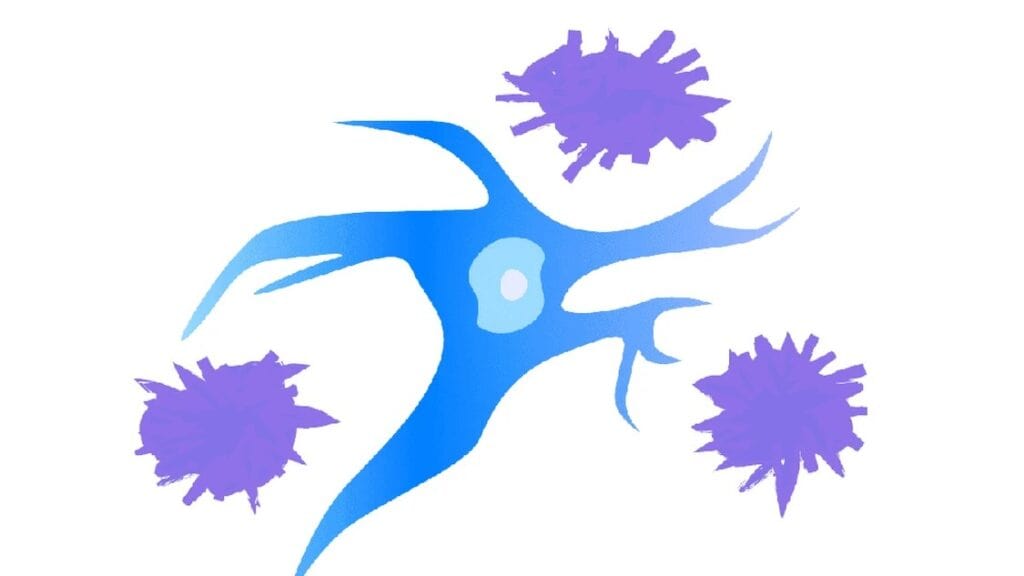
Amyloid is a protein which helps the brain recover from injury and protects against bacteria, viruses and tumors4 . In people living with Alzheimer’s, the brain makes errors in amyloid production. The protein begins to stick to itself, and the resulting ‘oligomers’ — long chains of amyloid — can combine and create larger structures called plaques. The plaques deposit in the gaps between connecting neurons.
As we grow older, our brains are less able to break down amyloid plaques. The signals transmitted by neurons, which form the basis of our thoughts, memories and feelings, can be disrupted. Because these plaques physically block the communication points (synapses) between cells, the information flow required for memory and thinking is continually interrupted.
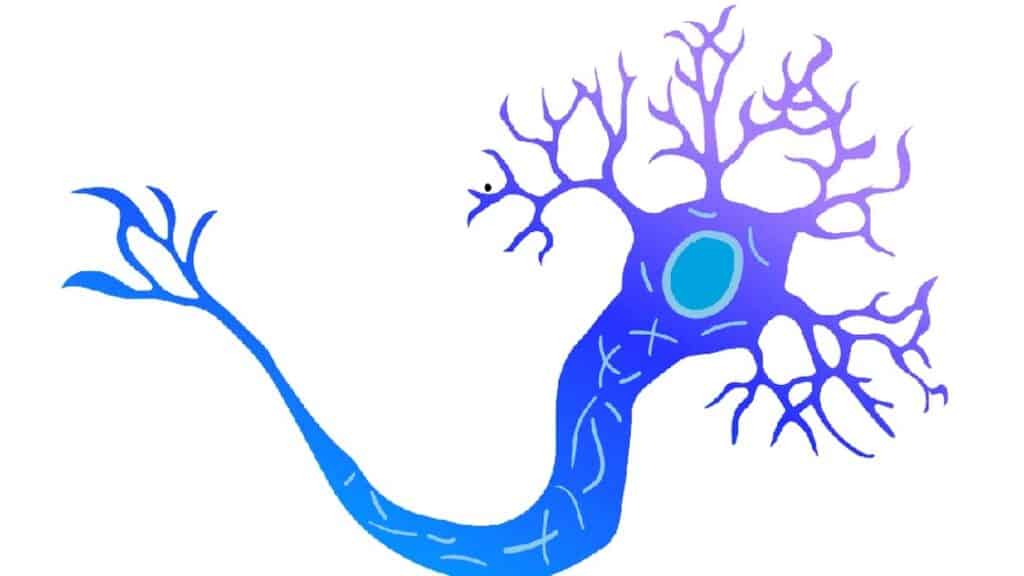
Amyloid alone cannot cause Alzheimer’s. While studies generally suggest amyloid accumulation is an important trigger, it is likely insufficient on its own to drive widespread cell death. Amyloid plaques are, however, generally understood to be the beginning of a ‘cascade’ effect, closely linked to a second deposit called Tau (though some research disputes the cascade effect, arguing the two deposits act in parallel)5.
Tau is a key component of a neuron’s cytoskeleton (a “skeleton” made of proteins), which, much like the bones in our bodies, gives neurons their shape and helps them carry out their jobs.
Tau is very sensitive to changes in the brain. Changes such as amyloid build-up can cause tau to become damaged and a neuron’s cytoskeleton to fall apart. Much like a broken bone makes it hard for a person to move, a neuron cannot function well without a healthy cytoskeleton.
Like amyloid, tau can also stick to itself to form tau oligomers, which can spread throughout the brain. Tau oligomers can also build up to form neurofibrillary tangles. These tangles gather inside of neurons, disrupting how they communicate and resulting in cell death.
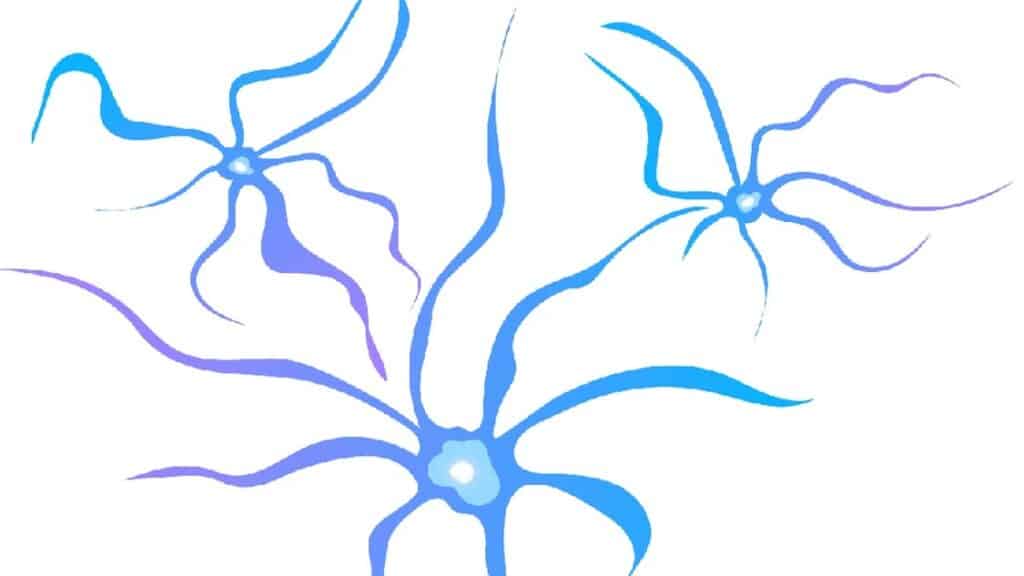
The third biomarker is neuroinflammation: chronic inflammation of the brain’s immune system. The brain has its own immune cells (‘microglia’). These cells clear amyloid plaques and tau tangles through inflammation, similarly to the inflammation that causes skin to swell around a cut, and causes fever when you have an infection.
But when the brain is inflamed over many years, its ability to correct the damage caused by amyloid and tau is diminished. The microglia become chronically agitated, releasing toxic chemicals known as cytokines.
In healthy brains, cytokines protect against infection and pathogens. But when chronically agitated, they begin to harm healthy nearby cells. This, in turn, creates more inflammation, further stressing the neurons and triggering more amyloid and tau production. The ‘vicious circle’ can often explain the rapid progression of cognitive decline in late-stage Alzheimer’s disease.
Currently, Alzheimer’s diagnosis often involves a combination of physical and cognitive evaluations, alongside imaging. Standard scans, like CT or MRI, are primarily used to rule out other conditions that mimic dementia, such as strokes, tumors, or fluid buildup.
But new tests under development are designed to measure blood-based biomarkers. These blood tests measure the presence of amyloid and tau directly and are less invasive than the spinal fluid biomarker tests currently used to confirm a diagnosis.
They can provide reliable, accurate results, and the technology is improving. This leads to earlier diagnosis, which gives us the opportunity to make lifestyle changes. It gives carers and families the time they need to understand the diagnosis, find the support they need and plan for the future.
As high-precision, blood-based biomarker tests become more accessible, giving millions of people across the Asia-Pacific region more time in good cognitive health becomes possible. It’s the next major leap of progress on our journey to fully understanding — and possibly even preventing — this debilitating disease.
Share
Link copied