


A three-pronged approach to HPV DNA testing can reach women in resource-limited areas who would otherwise go undiagnosed.
Most people will be infected with Human Papillomavirus (HPV) at some point in their lives, especially after becoming sexually active.
Most infections have no symptoms and clear naturally within 12-24 months, but 14 high-risk HPV types can become chronic1. Chronic HPV infections lead to abnormal changes in the cells lining the cervix and cause pre-cancerous lesions, which can develop into cervical cancer if not treated.
This transition typically takes 10 to 15 years — providing a critical window of opportunity for early detection and intervention2. Yet despite chronic HPV infections being one of the few preventable cancers — and the only one likely to be eradicated in our lifetimes — incidences remain very high.
Cervical cancer is the fourth most common cancer among women worldwide, with the Asia-Pacific region accounting for 57% of global cervical cancer deaths3. The vast majority of cervical cancer deaths — around 94% — occur in low- and middle-income countries (LMICs)4.
In these economies, stigma and hesitancy around gynecological exams, resource and skills constraints within healthcare systems, underdeveloped programmatic implementation and referral pathways, and fragmented delivery of services all limit access to the latest HPV testing and treatment methods.
The effectiveness of traditional screening methods is limited by low sensitivity, subjective interpretation, and a lack of scalability in high-volume settings.
HPV DNA testing solves these challenges. Its superior sensitivity allows clinicians to detect the high-risk virus before pre-cancerous lesions are even visible. The test is objective and, when automated, highly scalable, providing the foundation for a national elimination strategy and programmes.
The WHO’s 2020 Global Strategy aims to eliminate cervical cancer entirely by 2030. The Cervical Cancer Elimination Initiative calls on health systems to achieve three goals — the 90-70-90 targets5.
Achieving these goals requires a new approach to testing. Recent pilot projects across the Asia-Pacific region highlight three critical pillars essential for transforming cervical cancer screening: centralising HPV DNA testing, implementing self-sampling options, and strengthening laboratory systems.
1. High-volume, high-performance testing (the ‘Hub’)
Screening millions of women requires a system that can handle very large volumes of tests accurately and efficiently. In this model, samples are collected at thousands of decentralised local “spokes” (like primary health clinics) and then transported to a central laboratory (the “hub”).
The hub is designed for high-volume, high-performance testing. It uses automated, high-throughput machines to run the sensitive HPV DNA test — the “high-performance test” WHO recommends. This centralised approach avoids the need for costly, complex equipment at every local clinic, ensures every test is consistent and high-quality, and achieves economies of scale, dramatically reducing the cost per test6.
In the Philippines’ Centralised Laboratory Model for Cervical Cancer Screening (CLAMS) project, implemented by JHPIEGO and supported by Roche, the hub-and-spoke model was trialled over 18 months in five highly urbanised cities in the Metro Manila region.
4,969 women were screened through facility-based screenings, community outreach activities, and workplace screenings. Samples were then tested in a central lab — finding an HPV positivity rate of 7%.
2. Self-sampling to address access challenges
The single greatest barrier to screening is often not technology, but access. Many women avoid conventional screening due to discomfort, fear, or stigma associated with a gynecological exam. Self-sampling shatters this barrier. It empowers women to collect their own vaginal swab samples privately, whether in a health facility or at home. This builds trust in health systems, giving clinicians the insight they need to make confident decisions, and empowering patients to take ownership of their health.
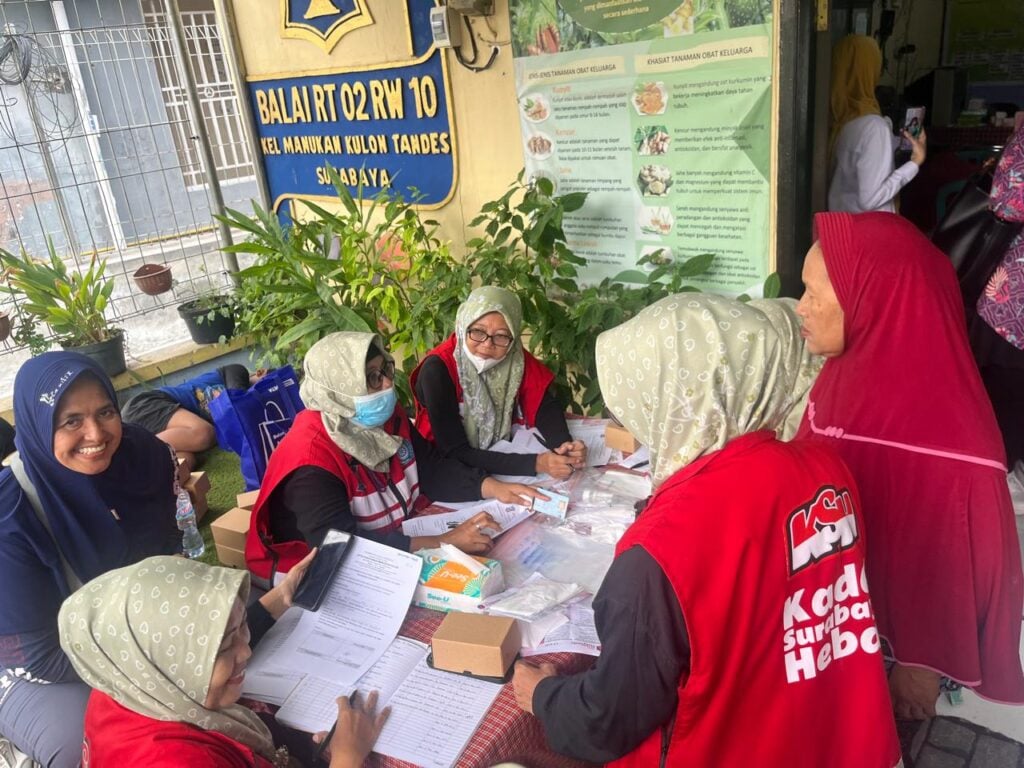
Early results from a pilot project in East Java, Indonesia, are overwhelmingly positive: almost all (99.9%) of women screened were able to successfully collect HPV DNA samples through self-sampling7, with the vast majority (96.6%) collected at community-based health posts. 4.9% of women tested positive for HPV, proving the feasibility of self-sampling, community-based service delivery, and ‘hub’-based laboratory processing.
3. Reliable lab infrastructure and data management
A nationwide screening program is dependent on a reliable, high-quality laboratory system. The “hub” cannot function without the proper physical infrastructure for molecular testing and, just as importantly, the trained personnel to operate it.
A screening program is only successful if it reliably connects every sample to a result and every positive result to a follow-up. This is where digital workflows become essential.
As the APEC roadmap and Indonesian white paper highlight, strengthening health data infrastructure is a key priority.
In Hai Phong, Vietnam, a pilot led by Roche with FIND and Center for Disease Control (CDC) Vietnam aimed to address critical gaps in early detection and expand equitable access to screening services.
Between June and December 2023, over 5,004 women were screened in both community health stations and mobile community screening events, as well centralized HPV testing at the CDC Hai Phong.
The pilot used dedicated Project Management Software (YTCS) to connect local health stations (spokes) with the provincial testing lab (hub). This digital registry manages the entire workflow — from sample tracking to the real-time delivery of results and follow-up guidance for HPV-positive women. It’s essential for robust case management, ensuring women don’t get lost in the system, and freeing up local health workers to focus on patient care.
The results proved the registry’s potential to improve outcomes: accuracy of testing was high, with an 8.1% HPV positive rate. 85.3% of HPV-positive women were successfully contacted for follow-up, and over half (55.3) sought care8.
The pilots in Asia-Pacific have provided a clear, evidence-based roadmap. We know how to eliminate cervical cancer. The models work. They are effective, scalable, and highly accepted by women.
The challenge is no longer technological; it is financial and political. The opportunity is to move these proven models from pilot projects to national policy. This requires decisive action from policymakers to secure sustainable funding and build the political will for nationwide implementation. Indonesia’s national plan, for example, identifies a staggering USD 4.5 billion funding gap by 2030, with USD 2.5 billion needed for screening alone7 .
For policymakers, the opportunity is clear. Now, we must seize it. There isn’t a moment to lose.
Share
Link copied