

Next-gen DNA sequencing (NGS) gives cancer patients the answers they need, much earlier in their journey — empowering them with trust in their treatment pathway and the confidence to make informed decisions.
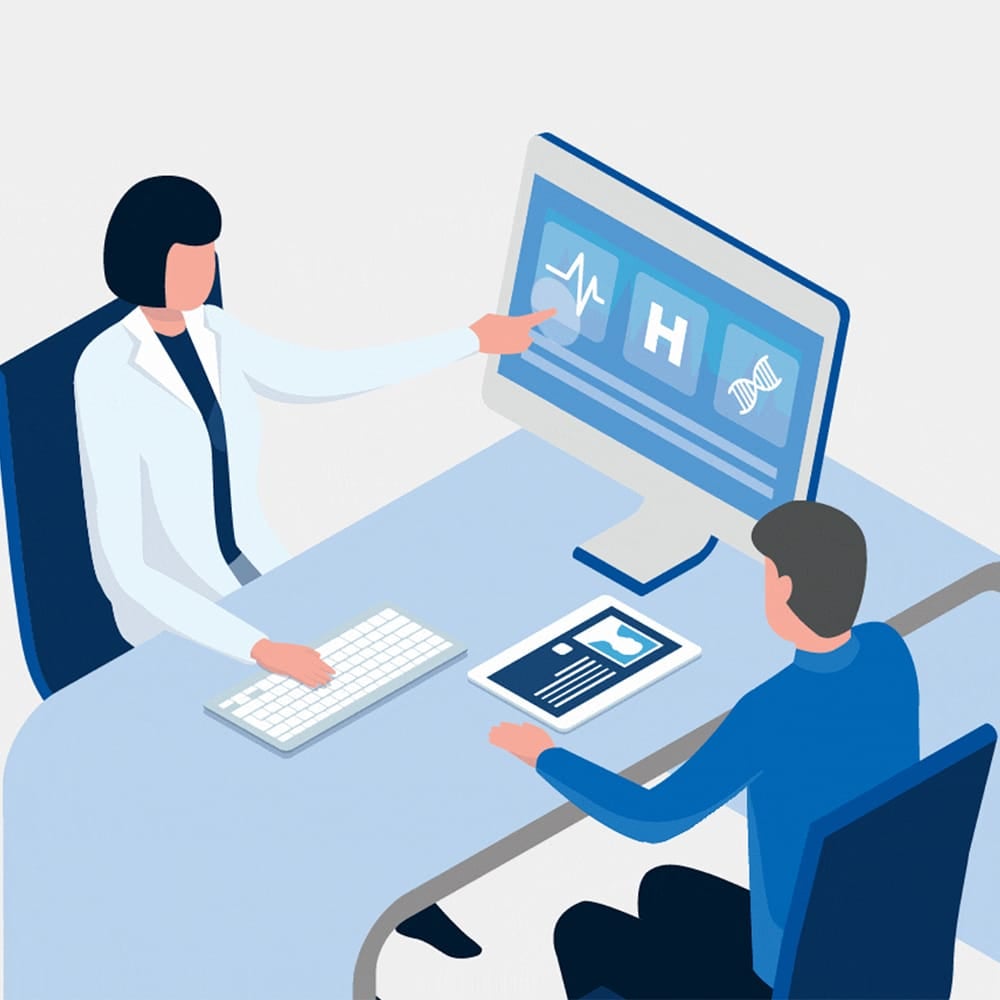
Meet Mei*. She’s 45, she runs a law firm and she has two children at home. So for Mei, life is busy. She thought she was always tired because work is so demanding. But a routine check-up, followed by a referral, reveals the news nobody wants to hear.
Her mind is racing. Is the tumour standard carcinoma? Is it aggressive? What’s the prognosis? In the not-so-distant past, traditional biopsies might not have given her the answers. Clinicians might have to order a second biopsy, or worse, make an educated guess based on probabilities rather than Mei’s own biology. She’d spend weeks living in fear of an unknown malignancy.
Now, though, next-generation sequencing (NGS) can give Mei the answers she needs — much, much sooner. It works by deciphering the unique genetic code inside her tumour cells. Rather than relying solely on what the cells look like under a microscope, NGS reads the DNA itself, scanning millions of fragments simultaneously to identify the specific mutations driving the disease.
This high-definition view acts like a molecular fingerprint, distinguishing an aggressive cancer from a slow-growing one, or a common subtype from a rare genetic anomaly. For Mei — and the estimated 2.37 million people diagnosed with cancer in South-East Asia alone in 20221 — it means the waiting game is over. The “unknown” becomes a defined diagnosis. Mei’s care team can create a concrete plan.
For clinicians, the ability to see the full genomic picture changes the trajectory of care. Historically, oncologists often had to rely on a “one-gene-at-a-time” approach — testing for the most common mutation, waiting for a result, and testing for the next one if the first came back negative. This process consumes lots of time and, crucially, valuable tissue samples.
By using comprehensive genomic profiling through NGS, clinicians can analyse hundreds of genetic alterations simultaneously from a single biopsy. This preserves precious tissue and provides a complete “map” of the tumour immediately.
It can derive comprehensive results from very low tissue inputs, significantly reducing the risk that patients like Mei will need to undergo a repeated, invasive biopsy procedure. And it means clinicians can confidently rule out ineffective treatments and rule in targeted therapies or clinical trials that match the patient’s unique biological profile. It empowers them to make decisions based on certainty, not probabilities — and deliver more personalised care.
And what about laboratories? The new generation of sequencing technology solves a long-standing logistical challenge: the “batching” bottleneck.
Traditionally, operating an NGS sequencer was like running a low-cost airline — it was only cost-effective at full capacity. Labs often had to wait days or even weeks to accumulate enough samples to justify a run, forcing patients to wait in the queue.
Advancements in NGS remove this barrier. New systems offer “on-demand” agility, allowing pathologists to load samples as they arrive — whether it’s a single critical case like Mei’s, or a full cohort. Tissue samples taken in the morning can be sequenced on the same day. This flexibility transforms the laboratory workflow; it reduces hands-on time, and positions labs as responsive, real-time partners in patient care.
And previously, DNA sequencing required teams of highly specialised bioinformaticians to interpret the complex data. In the Asia-Pacific region, where many economies face a critical shortage of pathology staff, that’s a problem. In Cambodia, for example, one study found there were just four practising pathologists in 20162.
But NGS automates much of this workflow. That means faster, more precise diagnostic insights are no longer limited to high-resource healthcare facilities. NGS democratises access to diagnostic care and meets patients where they are, by allowing more labs to deliver gold-standard genomic insights.
So where does this leave Mei and the millions of others in her position? NGS means the nail-biting wait for answers — and ultimately, treatment — is shorter. Earlier treatment empowers patients with more trust in healthcare providers, more confidence to make decisions, and better health outcomes. And that’s a win for everyone: patients, clinicians, labs and health systems as a whole. The priority now is ensuring these gold-standard diagnostic insights reach the patients who need them.
*Mei is a hypothetical character to illustrate patients’ real-world experiences of cancer diagnosis.
Share
Link copied