

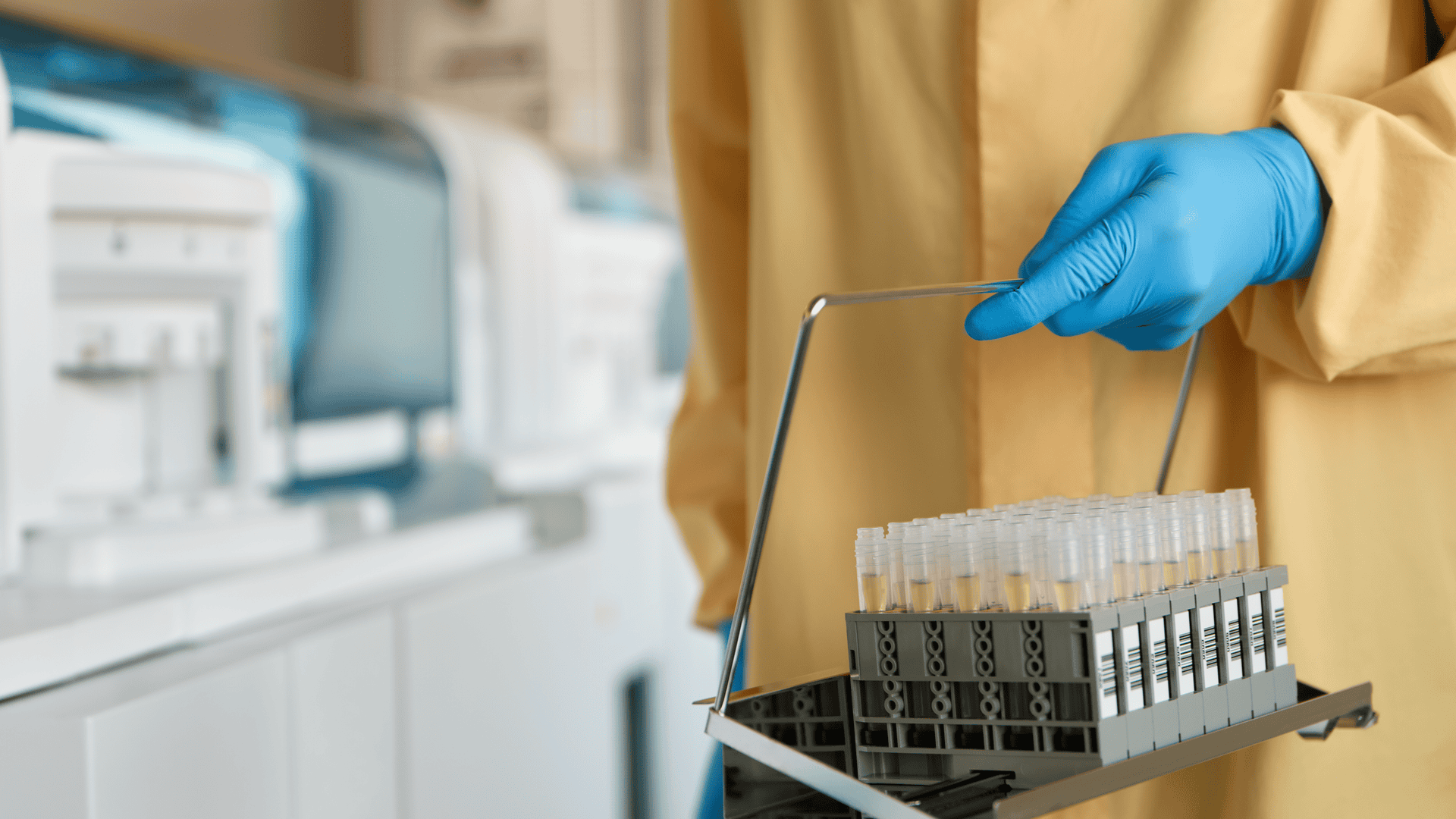
Traditional mass spectrometry (MS) has always been confined to specialised environments. But what if we could give patients these gold-standard diagnostic insights at scale?
Traditional mass spectrometry — an analytical technique to identify and quantify specific molecules like biomarkers — has long been confined to siloed lab environments. It required highly specialised technical expertise and manual, labour-intensive workflows; it was suitable only for complex, high-stakes clinical needs. The potential for broader clinical application was limited1,2,3.
Now, though, advanced mass spectrometry solves those challenges. For the first time, MS can be used across a much wider range of clinical workflows and therapeutic areas. It can provide the diagnostic insights to improve patient outcomes at scale.
Take organ transplant care: for someone undergoing an organ transplant, the operation is far from the only risk to their health. When cells, tissue or organs are moved from one site to another, there’s a significant risk that the immune system recognises the transplant as foreign — and rejects it. The resulting immune response may destroy the transplanted organ or issue, placing the patient’s life at risk.
To prevent this, managing the immune system’s response4 is one of the most critical aspects of organ transplant care. Immunosuppressant drugs (ISDs) play a vital role — but come with major patient safety considerations.
Generic ISDs are ‘critical dose drugs; either low dosing or overdosing could have serious adverse consequences5, including drug-induced organ toxicity and an increased risk for infections and malignancy due to over-immunosuppression6. And antimicrobial toxicities make infections in organ transplant patients difficult to treat7. Close monitoring of blood for ISD concentration is therefore crucial; labs need highly sensitive diagnostic tools.
Advanced mass spectrometry can provide the certainty clinicians need. The gold standard — liquid chromatography-tandem mass spectrometry (LC-MS/MS) — significantly improves accuracy8, specificity and precision compared with older methods such as immunoassays. Immunoassays cannot always distinguish between byproducts of ISD metabolism (metabolites) and the drug itself, meaning test results can dangerously inflate the drug concentration.
LC-MS/MS eliminates this ambiguity. Because it separates molecules based on their specific mass and charge, it ignores the “lookalike” metabolites and measures only the active drug.
For labs, this means more accurate, precise results. Clinicians prescribe multiple ISDs used simultaneously in a patient’s treatment regimen9, and mass spectrometry allows for “multiplexing” — the ability to detect and quantify multiple drugs (such as Tacrolimus, Cyclosporine, Sirolimus, and Everolimus) in a single run from a single sample. For high-throughput laboratories facing increasing demand, the efficiency gains are transformative.
Mass spectrometry also addresses the long-standing challenge of inter-laboratory variability. By measuring the absolute mass of a molecule, results become standardised. A patient’s test result should be consistent whether they are tested in a specialist centre in Singapore or a local clinic in Sydney.
For the transplant clinician, dosing immunosuppressants is a constant tightrope walk. The therapeutic window (safe and effective dosage range) is very narrow: too low, and the immune system attacks the organ; too high, and the drug becomes toxic.
The precision of mass spectrometry removes this guesswork. With more accurate data, clinicians can confidently tailor dosages to the patient’s specific metabolic profile — delivering true personalised medicine. This allows for faster decision-making and reduces the need for repeat testing to confirm ambiguous results.
The ultimate beneficiary of mass spectrometry technology is the patient. For a transplant recipient, the journey involves a lifetime of blood tests and anxiety about their organ health.
So more precise monitoring translates directly to quality of life, empowering patients with the answers they need and enabling personalised care. And by avoiding accidental overdosing caused by misleadingly high immunoassay results, patients can avoid the debilitating side effects associated with immunosuppressants such as tremors, nausea, and drug-induced organ damage.
Integrating mass spectrometry into therapeutic drug monitoring (TDM) also contributes to long-term health outcomes; in a 6-month study of renal transplant patients, acute rejection occurred in fewer patients monitored with mass spectrometry10. It shifts the focus of transplant care from preventing rejection to ensuring the patient can live a long, healthy life with their new organ.
The challenge now is improving access to the high–quality diagnostic insights mass spectrometry provides. It will take time; barriers to overcome include the initial investment and the need for specialised training.
But when we prioritise gold standard clinical insights, every stakeholder benefits. With the stakes so high for organ transplant patients, closing the adoption gap is the way to improve outcomes across Asia-Pacific.
Share
Link copied