


Women are living longer than men, but they are not living healthier lives. In over 700 diseases, women are diagnosed later by an average of four years. Across every region and income level, women spend approximately 25% more of their lives in poor health.
This paradox of modern women’s health—where longevity has improved but quality of life has stalled—was the central theme of a high-level dialogue at the Women Deliver 2026 conference in Melbourne. As Simone Clarke, CEO of UN Women Australia, noted in her opening remarks, this health gap isn’t a biological inevitability; it is a direct result of how our health systems are designed and what they fail to diagnose in time.
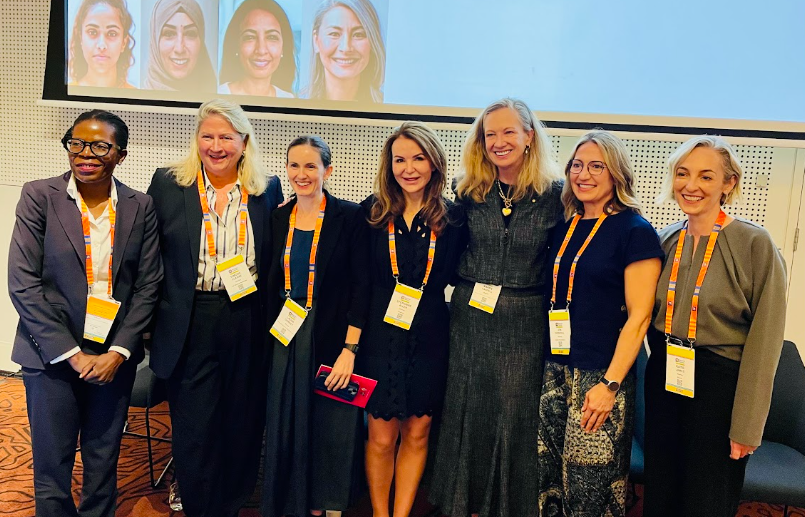
In a policy session at Women Deliver: Mind the Diagnostics Gap: Strengthening Diagnostics Capacity for Women’s Health, moderated by Stephanie Allen, Senior Advisor at Kearney, the discussion focused on a critical blind spot in global health: diagnostic capacity as shown in the recently published Health Index report. Guest panelists explored how our current systems are reactive rather than proactive.
The value of early detection is often attributed only to the treatment that follows, rather than being recognised as the foundational infrastructure that makes care possible. What’s also often missed is that if diseases are caught early, treatment may even be avoided, potentially saving patients and governments alike unnecessary expenditure. This disconnect is a primary structural barrier, with systems simply not designed for early detection or the seamless integration of diagnostics into care pathways.
To move from abstract system performance to real-world impact, the conversation turned to those on the frontlines of both science and survival.
Katie James, a two-time preeclampsia survivor, shared a harrowing account of how diagnostic clarity—or the lack thereof—is the bridge between a life-threatening crisis and a safe delivery. Her story vividly illustrates that the difference between care and missed care is almost always determined at the point of diagnosis.
Alongside Katie, Karen Canfell, Lead of the Cancer Elimination Collaboration at the University of Sydney, highlighted how diagnostics can change the trajectory of an entire nation’s health. We already have the blueprint for success with cervical cancer; in countries like Australia, where vaccination, screening, and treatment are aligned, we are on the verge of eliminating the disease entirely. This success reinforces the importance of linking diagnostics directly to treatment and follow-up care.
In a focused “Spotlight Dialogue,” experts discussed how to move from growing awareness to effective implementation. Jen Driscoll (Gates Foundation) and Laura Downey (The George Institute, UNSW) addressed the economic and strategic hurdles:
The perspectives shared by these leaders helped shape a roadmap for a future where women’s health is addressed across their entire life course, not just in moments of crisis.
As Samukeliso Dube, Executive Director of Family Planning 2030, noted in her closing reflections: “The foundation of women’s health is choice.” But that choice is only meaningful when a woman has access to the information she needs to make it. By removing structural barriers and embedding diagnostics into the heart of our healthcare systems, we can finally ensure that every woman—like Katie—has the chance to see her family thrive.
Share
Link copied