


A New Model for Liver Cancer Screening and Care
What does it truly cost to suffer from liver disease?
Liver cancer remains a major challenging health issue in China. Although China contains less than 20% of the world’s population, it accounted for nearly half of new liver cancer cases worldwide,. Hepatocellular carcinoma (HCC) represents approximately 90% of all cases of primary liver cancer and develops predominantly in those people with cirrhosis, or scarring, due to chronic hepatitis B or C. Long-term disease management can cost thousands of yuan each year, rising significantly as the disease advances. By the time liver cancer is diagnosed at a late stage, treatment costs can exceed 300,000 yuan, while five-year survival rates remain below 15%.
This trajectory can change.
When liver cancer is detected early, treatment is often more effective and less costly. Survival rates can increase to as high as 75 to 90 percent. The difference comes down to one factor: timing.
China is now placing greater emphasis on detecting risk earlier and intervening sooner.
Across the country, a new approach to liver disease management is taking shape. It focuses on identifying high-risk individuals earlier, diagnosing disease sooner, and ensuring more consistent follow-up over time.
This approach is supported by advances in:
Together, these capabilities allow clinicians to move beyond isolated testing towards more informed and continuous decision-making.
Digital care pathways are beginning to support this shift. They help identify at-risk populations, guide follow-up, and improve coordination across different points of care.
Liver cancer prevention in China is increasingly being addressed as a system-wide challenge.
Efforts are underway to expand access to screening, strengthen monitoring systems, and establish long-term mechanisms for early detection. The aim is to integrate prevention and treatment more effectively, so that patients are identified earlier and managed more consistently.
Pilot programmes in regions such as Jiading District, Shanghai and Nanshan District, Shenzhen are exploring new models for managing high-risk populations. These include extending screening beyond hospital settings and embedding early detection into routine care. As of April 30, 2026, the programmes have completed 19,896 liver cancer screenings. A total of 16 cases of primary HCC and 2 cases of secondary HCC were detected. The early-stage detection rate stands at 88.5%, representing a significant improvement compared to epidemiological data in China.
The life-saving impact of this approach is exemplified by a resident in Jiading. During the community screening of high-risk populations, Mrs. Lu was identified with elevated PIVKA-II levels and a hypoechoic mass in liver ultrasound. This early discovery led to a successful timely surgery for HCC.
Reflecting on her journey, Mrs. Lu shared: “I am incredibly grateful that I participated in this screening project. It identified the cancer at an early, treatable stage through precise testing, and that timely diagnosis made all the difference for my recovery “. This case underscores the life-saving potential of integrating precise diagnostics into primary care to change patient outcomes.
While liver cancer often remains asymptomatic in the early stages, it is far from being uncontrollable. Through systematic screening and early intervention, the mortality rate can be significantly reduced. Liver ultrasound and biomarkers such as AFP and PIVKA-II, alongside the GAAD algorithm are effective liver cancer screening methods that have been validated internationally.
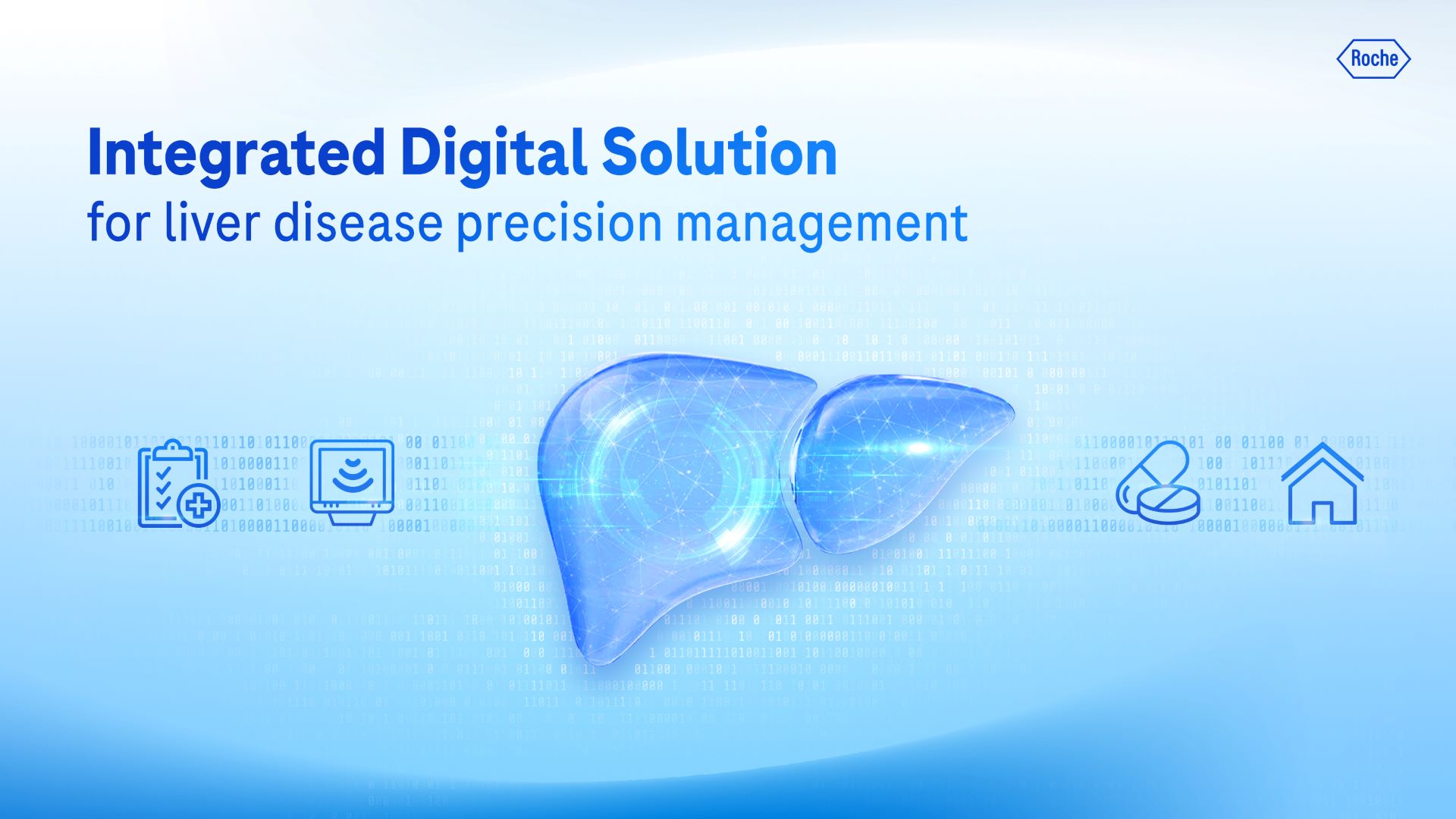
By integrating participants’ key clinical data—including CBC, liver function, hepatitis virus markers including HBV and HCV, tumor markers including AFP and PIVKA-II, imaging tests results and patient profiles —into the digital management solution for chronic liver diseases, clinicians can achieve precise risk stratification. This integration of advanced testing data, risk models, and smart follow-up assistance ensures continuous and accessible care for populations at-risk, advancing early detection, diagnosis, and treatment of liver cancer.
Once diagnosed with liver cancer, patients are enrolled in the Oncology Hub platform for further management. Powered by an integrated large language model (LLM), the system covers scenarios including Multidisciplinary Team (MDT), perioperative and treatment management, and post-discharge follow-up, achieving end to end management of liver cancer.
Within this evolving landscape, digital technologies are playing an increasingly important role.
Tools such as artificial intelligence, digital pathology, and data integration platforms are helping clinicians access and interpret diagnostic information more efficiently. This supports earlier identification of disease and more accurate risk assessment.
Industry partners are contributing to this shift by working with hospitals and local governments to implement these technologies in practice.
The key to liver cancer prevention and treatment lies in early screening and end-to-end management. Roche aims to combine global expertise with local practice to create meaningful value for patients, clinicians, and society.
These solutions are not standalone. They are part of a broader effort to connect data, clinicians, and care pathways in a more cohesive way.
As these approaches gain traction, digital health initiatives are receiving increasing recognition for their clinical and societal value.
Programmes focused on integrating diagnostics, data, and care pathways have been acknowledged for their contribution to improving early detection and supporting more efficient healthcare delivery.
Among these efforts, Roches’ work in liver disease management reflects the growing importance of digital approaches in advancing earlier intervention and system-level impact.
This also reflects a wider shift in China’s healthcare system. Innovation is no longer limited to new technologies alone, but is increasingly defined by how effectively those technologies are applied in real-world care.
The direction is clear. Liver cancer care in China is moving towards earlier detection, more precise screening, and better coordinated management.
This shift has the potential to reduce the burden of disease, improve survival rates, and create a more sustainable approach to care.
Because in liver cancer, earlier detection is not just beneficial. It can change outcomes entirely.
Share
Link copied