


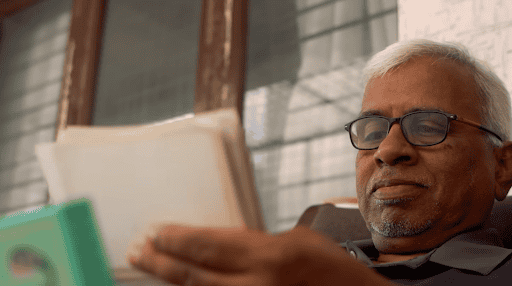
Vijaya’s journey began not with memory loss, but with subtle early signs of a disease. Jayaram, her husband and primary caregiver, emphasizes, this is where timely intervention can give families something priceless: time to understand, adapt, and care.
A gifted Carnatic singer and a beloved matriarch, Vijaya’s life was once defined by the complex rhythms and melodies of her art. For her husband, Jayaram, her voice was the heartbeat of their home. But as the notes began to falter and the lyrics of familiar ragas started to slip away, their family faced a reality that many often mistake for the simple toll of aging.
In this moving account, Jayaram shares how a diagnosis of Alzheimer’s disease reshaped their family’s life forever. He reflects on the subtle shifts when she was just 56 years old—the missed cues, the forgotten phone numbers and the eventual realisation that their world was changing.
While Alzheimer’s is a progressive journey, this is not a story driven solely by grief. It is a story about the power of time. It speaks to why an early diagnosis is not just a clinical milestone, but a bridge that allows families to prepare, to adapt, and to cherish the moments that remain.
For many families, the journey to a diagnosis is delayed by the stigma surrounding cognitive decline or the misconception that memory loss is an inevitable part of growing old. However, as Vijaya’s story highlights, identifying the ‘why’ behind the symptoms is the first step toward reclaiming a sense of control.
Early detection in Alzheimer’s allows for:
“The Memory Vault” reminds us that while Alzheimer’s may take away certain memories, it cannot take away the essence of a person or the love shared within a family. Through the lens of Jayaram and Vijaya, we see that early insight provides the most precious commodity of all: the time to hold on to what matters most.
If you have noticed changes in a loved one’s memory or behavior, or if you have been hesitant to seek answers, Vijaya’s story serves as a reminder that awareness is the first step toward a more compassionate and prepared future.
Link copied