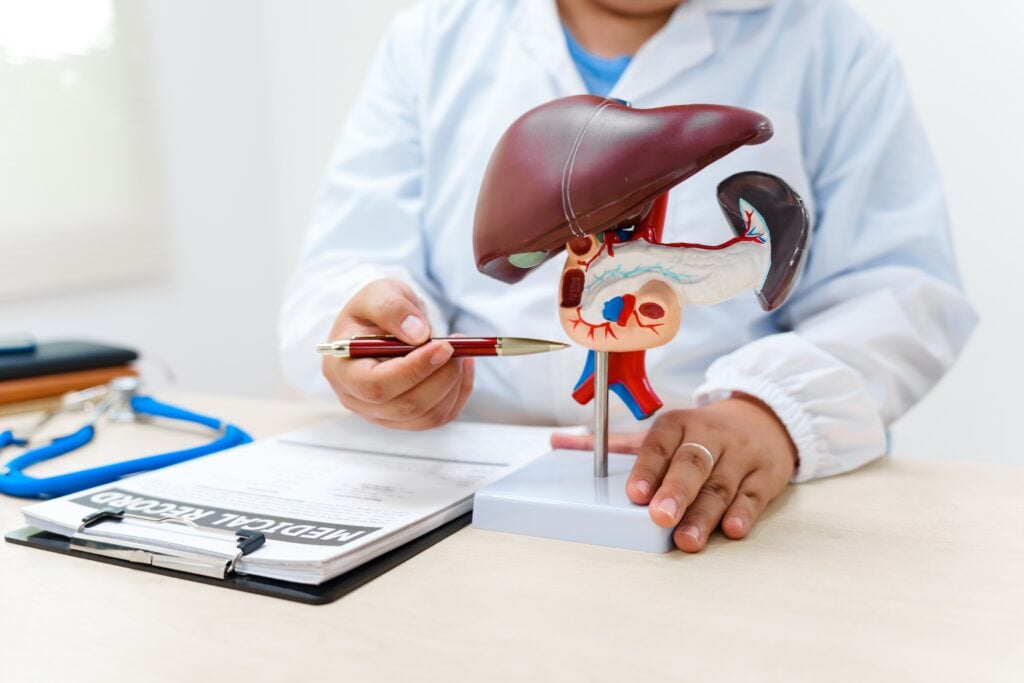



New serum biomarkers can detect liver cancer risk earlier, so patients have time to make lifestyle changes
In Hong Kong, most people know a family reeling from the impact of liver disease. In 2017, the overall prevalence of Metabolic Dysfunction-Associated Steatotic Liver Disease (MASLD) in the Asia-Pacific region was 33.9%1. A disease progression model for four Asian regions (Hong Kong, Singapore, South Korea and Taiwan), predicts this figure to rise by another 6–20% between 2019 and 20301. Hepatocellular carcinoma, decompensated cirrhosis and mortality due to MASLD is projected to rise from 65–86%, 65–100% and 65–100% respectively1.
The sheer scale of the health burden — often asymptomatic until late stage — creates a fundamental system challenge: how can we catch the disease early enough to change the outcome, before it progresses to hepatocellular carcinoma (HCC)?
We have to rethink the way we screen at-risk patients, says Prof. Grace Wong of the Chinese University of Hong Kong. Current diagnostic pathways rely on alpha fetoprotein (AFP) surveillance — but this approach comes with challenges.
AFP alone is not always sufficient to detect HCC; accuracy is dependent on cut-off levels, degree of liver necroinflammation, and etiology of liver disease2. Around half of patients diagnosed with HCC may have normal AFP levels3. Demand for ultrasound imaging, meanwhile, far outstrips supply.
But what if a more sensitive serum biomarker could bridge the diagnostics gap? PIVKA-II may well do so. When a panel of 17 experts in hepatology, surgical oncology, medical oncology, and laboratory medicine from countries across Asia-Pacific reviewed the evidence on the biomarker’s clinical usefulness and value, the consensus was clear: PIVKA-II is valuable for detection of HCC in AFP-negative patients, and could potentially benefit early detection of HCC in combination with AFP4.
PIVKA-II offers a more sensitive, objective tool for clinicians to stratify risk. It’s a way to prioritise the most urgent, high-risk patients for limited ultrasound slots. And it provides the early warning clinicians need to make patients aware of the risk to their health — so the patient can make lifestyle changes sooner.
This underpins a broader shift towards more layered, sensitive surveillance. In Zhuhai People’s Hospital, China, a successful pilot has shown that early detection of HCC through comprehensive evaluation with abdominal ultrasound, AFP, PIVKA-II, and GAAD can transform health outcomes.
Of 40 cases of HCC identified, 39 were early-stage — dramatically changing the prognosis, giving patients more time to make changes and offering significantly better chances of curative treatment5.
To save lives in Hong Kong, we must now replicate the Zhuhai People’s Hospital’s success. It requires us to prioritise equitable access to more sensitive diagnostics. It also requires a commitment to inclusive care — helping patients and their families understand the importance of regular screening, so they can play a more informed, active role in their own wellbeing.
These are worthy goals. Because when health systems prioritise prevention over cure, early detection gives patients, families and clinicians the answers they need, when they need them — and that can change everything.
Share
Link copied